

Professional-grade doesn’t mean you need a medical degree to use it. It means the device works.
When people search for “professional grade PEMA device for home knee treatment,” they’re done experimenting with consumer wellness gadgets. They’ve tried the cheap devices. They’ve used the portable units that felt like nothing was happening. They’ve spent money on products marketed as “therapeutic” that turned out to be barely stronger than a vibrating massager.
What they want now is simple: the same technology doctors and physical therapists use in their clinics, but designed for safe, effective use at home without supervision.
Around the quiet streets near Robbinsdale and the peaceful trails at Memorial Park in Rapid City, people dealing with chronic knee pain have figured out that there’s a massive difference between consumer-grade PEMA devices and professional-grade medical equipment. Consumer devices are designed to be affordable, portable, and easy to market. Professional devices are designed to deliver measurable therapeutic results based on clinical research.
The gap between these two categories isn’t just price. It’s power, precision, consistency, and proven outcomes.
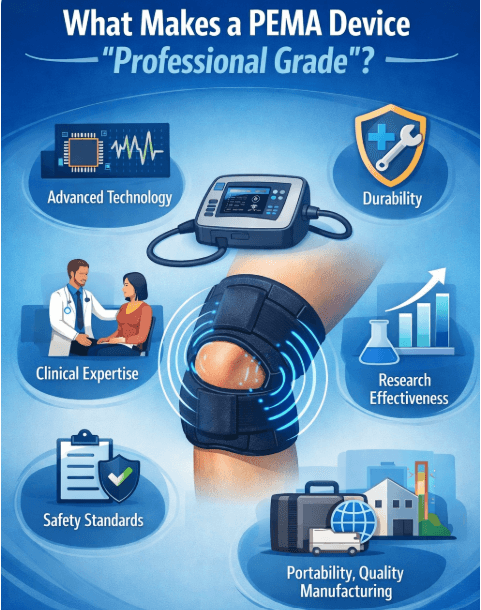
What Makes a PEMA Device “Professional Grade”?
The term “professional grade” gets thrown around a lot in marketing. Here’s what it actually means when applied to PEMA devices for knee treatment:
1. FDA 510(k) clearance for medical use
• Consumer wellness devices are often “FDA registered” — which just means the company filled out paperwork
• Professional-grade devices have FDA 510(k) clearance — which means they went through clinical trials and proved they work for specific medical conditions
• This is the single most important distinction between real medical devices and wellness gadgets
2. Clinical-strength electromagnetic field intensity
• Consumer devices typically deliver 10-50 Gauss of electromagnetic intensity
• Professional devices deliver 50-200+ Gauss with precise control over frequency and duration
• The difference matters because cartilage repair and bone healing require sufficient intensity to penetrate deep into the joint
3. Adjustable frequency ranges based on research
• Professional devices allow you to customize frequency settings (1-100 Hz) based on your specific condition
• Consumer devices often have preset programs with no customization
• Research shows different frequencies work better for different conditions: lower frequencies for pain relief, mid-range for cartilage repair, higher frequencies for bone healing
4. Dual-channel or multi-channel capability
• Professional devices can treat multiple areas simultaneously with different settings
• This matters if you have knee pain in both knees or want to treat knees and back at the same time
• Consumer devices are typically single-channel with one treatment area
5. Built for durability and long-term use
• Professional devices are designed to run for thousands of hours without degrading
• Consumer devices often fail within 6-12 months of regular use
• Medical-grade components cost more but last significantly longer
6. Backed by published clinical studies
• Professional-grade manufacturers cite peer-reviewed research showing their devices work
• They can provide studies, protocols, and outcome data
• Consumer devices rely on testimonials and marketing claims
Around Canyon Lake and Memorial Park, people investing in professional-grade PEMA devices aren’t guessing. They’re buying technology that’s been proven to work in clinical settings and is now available for home use.
Why Professional-Grade Devices Work Better for Knee Treatment
Knee pain isn’t a surface-level problem. The cartilage, bone, synovial fluid, and surrounding tissue are deep inside the joint. Consumer-grade devices that deliver weak electromagnetic pulses might improve surface circulation, but they don’t penetrate deep enough to stimulate cartilage repair or reduce bone inflammation.
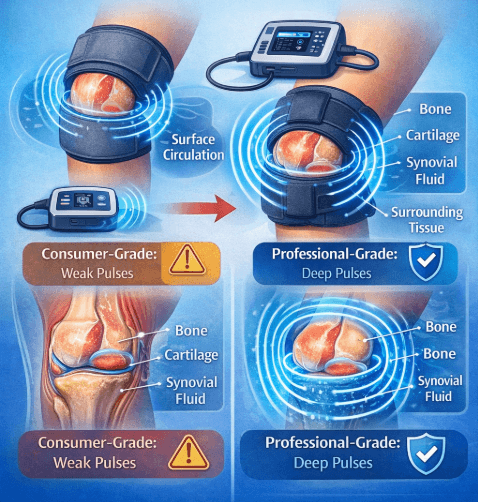
Here’s what professional-grade intensity and precision deliver:
✅ Deeper tissue penetration — Electromagnetic fields need sufficient strength to reach the knee joint capsule, not just the skin and surface muscle
✅ Targeted frequency for specific conditions
• 1-10 Hz: Pain relief and nervous system calming
• 10-50 Hz: Inflammation reduction and circulation improvement
• 50-100 Hz: Cartilage repair and chondrocyte stimulation
✅ Consistent, repeatable results — Professional devices maintain the same intensity and frequency session after session, year after year
✅ Faster healing timelines — Clinical studies showing 60% pain reduction and 42% function improvement used professional-grade devices, not consumer gadgets
✅ Safe for extended use — Professional devices are tested for 12-hour overnight sessions without overheating or causing tissue damage
What happens when you use professional-grade PEMA for knee treatment:
🔬 Week 1-2: Inflammation starts to decrease. Circulation improves. Morning stiffness reduces slightly.
🔬 Week 3-4: Pain levels drop noticeably. Range of motion improves. You start moving more easily throughout the day.
🔬 Week 5-8: Cartilage repair accelerates. Bone edema reduces. Pain becomes manageable without daily medication.
🔬 Week 9+: Results stabilize. Knees feel stronger. Activities that used to hurt become possible again.
These timelines come from clinical trials using professional-grade devices. Consumer devices may take longer or may not produce measurable results at all.
The Difference Between Clinic Devices and Home Professional Devices
Clinic devices (what doctors and physical therapists use):
• Extremely powerful (200-500+ Gauss)
• Large, heavy, not portable
• Require trained operator to adjust settings
• Cost $10,000-$50,000+
• Designed for treating multiple patients per day
Home professional devices (what serious patients buy):
• Moderately powerful (50-200 Gauss)
• Portable or semi-portable
• User-friendly controls with preset programs based on clinical research
• Cost $800-$3,000
• Designed for consistent personal use
Consumer wellness devices (what most people buy first):
• Weak intensity (10-50 Gauss)
• Very portable, often battery-powered
• Minimal customization
• Cost $100-$500
• Designed for relaxation and general wellness, not medical treatment
The sweet spot for home knee treatment is a professional-grade home device. It’s powerful enough to deliver clinical results but safe and simple enough to use without medical supervision.
Top Features to Look for in Professional-Grade Home PEMA Devices
1. Power output and intensity control
• Look for devices that deliver at least 50-100 Gauss minimum
• Adjustable intensity so you can start gentle and increase as your knees adapt
• Digital display showing exact settings
2. Frequency range and customization
• Must include 1-100 Hz range (proven effective for knee osteoarthritis)
• Ability to create custom programs or use research-based presets
• Some devices offer sweep frequencies that cycle through multiple ranges
3. Treatment area design
• Knee-specific applicators (wraps, pads, or coils)
• Dual applicators for treating both knees simultaneously
• Adjustable positioning so you can target the exact area of pain
4. Session duration options
• 20-30 minute programs for daily maintenance
• 60-120 minute programs for acute flare-ups
• Overnight 8-12 hour programs for severe degeneration (some devices only)
5. Safety certifications
• FDA 510(k) clearance (non-negotiable)
• CE marking if manufactured in Europe
• UL or ETL electrical safety certification
6. Durability and warranty
• Minimum 2-year warranty (professional devices should last 5-10+ years)
• Replaceable parts availability
• Responsive customer support
7. Clinical documentation
• Manufacturer should provide published studies using their device
• Treatment protocols based on research
• Expected outcomes with realistic timelines
Who Benefits Most from Professional-Grade Home Devices?
People with moderate to severe knee osteoarthritis
• Consumer devices don’t have enough power to address significant cartilage loss
• Professional devices deliver the intensity needed for tissue repair
Athletes recovering from knee injuries
• Professional-grade PEMA accelerates healing and reduces inflammation faster than low-power alternatives
• Many professional sports teams use similar technology
People over 60 with chronic knee pain
• Clinical trials show exceptional results in patients over 70 using professional-grade devices
• The power and consistency matter more as tissue healing naturally slows with age
Anyone who’s tried consumer devices without results
• If you’ve used a $200 device for months with minimal improvement, the problem is likely insufficient power
• Professional devices often succeed where consumer devices fail
People trying to avoid or delay knee replacement surgery
• Professional-grade PEMA is one of the few non-surgical interventions with clinical evidence showing it can improve cartilage health and reduce pain enough to delay or prevent surgery
People who can’t tolerate NSAIDs long-term
• Professional-grade devices offer a drug-free alternative with documented effectiveness
• 26% of patients in clinical trials were able to stop taking pain medication entirely
Around the peaceful neighborhoods near Robbinsdale and the trails at Memorial Park, people investing in professional-grade devices are serious about healing. They’re not looking for temporary relief. They’re looking for technology that can help them avoid surgery, reduce medication, and get back to activities they love.
Common Mistakes When Buying Professional-Grade Devices
❌ Buying based on “professional grade” claims without verifying FDA clearance
• Marketing can call anything “professional grade”
• Always verify 510(k) clearance on the FDA database
❌ Assuming higher price always means better quality
• Some expensive devices are just consumer products with premium branding
• Compare specifications, not just price tags
❌ Not checking if the device comes with knee-specific applicators
• Full-body mats are great for general wellness
• Knee treatment requires targeted application
❌ Ignoring warranty and support
• Professional devices should last years
• If the warranty is only 90 days, that’s a red flag
❌ Buying without trying
• Many wellness clinics let you experience professional-grade PEMA before buying
• At Graceful Touch in Rapid City, you can try 5 free sessions to see if it works for you
❌ Expecting instant results
• Even professional-grade devices take 2-4 weeks to show noticeable improvement
• Full benefits appear around 8 weeks with consistent use
Professional-Grade PEMA as Part of a Complete System
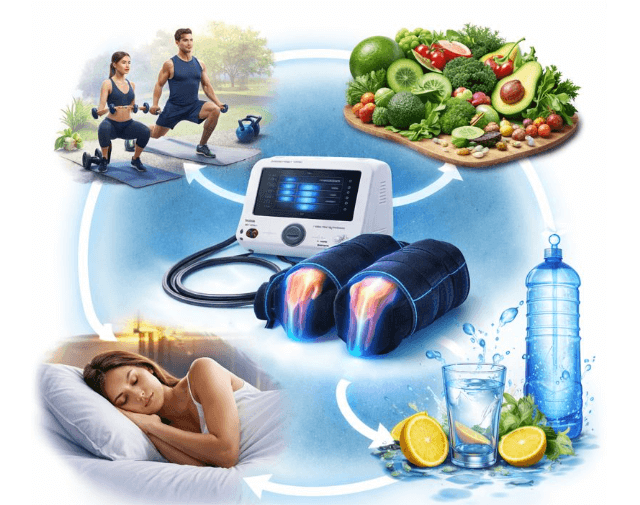
Professional-grade technology amplifies everything else you do for your knees. But it’s not a substitute for movement, nutrition, hydration, and sleep.
Here’s how professional-grade PEMA fits into a complete knee healing system:
✅ Daily PEMA sessions (20-30 minutes or overnight)
• Reduces inflammation
• Improves circulation
• Stimulates cartilage repair
✅ Light daily movement (10-15 minutes)
• Walking, gentle stretching, or physical therapy exercises
• Keeps joints lubricated and muscles engaged
✅ Anti-inflammatory nutrition
• Omega-3s from fish or flax
• Leafy greens and colorful vegetables
• Minimal processed foods and sugar
✅ Proper hydration
• Joints need synovial fluid to move smoothly
• Dehydration amplifies stiffness and pain
✅ Quality sleep (7-8 hours)
• Deep sleep is when tissue repair happens
• PEMA often improves sleep quality by calming the nervous system
Professional-grade PEMA accelerates every one of these processes. It makes movement less painful. It helps your body use nutrients more effectively. It supports deeper, more restorative sleep. But it works best when all systems are functioning together.
Around the peaceful shores near Canyon Lake and the trails at Memorial Park, people are discovering that professional-grade technology isn’t about finding one magic solution. It’s about giving your body the most powerful tools available while supporting healing through movement, nutrition, and rest.
The Bottom Line: Professional-Grade Means Proven Results
Consumer devices promise relief. Professional-grade devices deliver it.
What separates professional-grade PEMA devices from consumer gadgets:
✅ FDA 510(k) clearance for medical use
✅ Clinical-strength electromagnetic intensity (50-200+ Gauss)
✅ Adjustable frequency and duration based on research
✅ Built for durability and thousands of hours of use
✅ Backed by published clinical studies showing measurable outcomes
What professional-grade devices can do that consumer devices can’t:
✅ Penetrate deep enough to reach cartilage and bone
✅ Deliver consistent therapeutic intensity session after session
✅ Accelerate healing timelines proven in clinical trials
✅ Support long-term use without degrading or breaking down
If you’re serious about treating knee pain at home, professional-grade technology is the difference between hoping something works and knowing it will. Your knees deserve equipment that’s been proven in clinical settings — not just marketed with promises.
Are you ready to invest in technology that actually works, or still hoping a cheaper option will be enough?